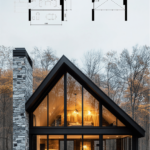
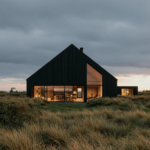
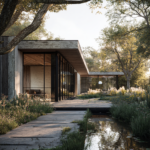
Contemporary villas have become one of the most sought-after residential forms across the world — and it’s easy to see why. This architectural style feels timeless yet modern, minimal but warm, and universally adaptable to different climates, landscapes, and cultures. From coastal Europe to rural New Zealand and urban fringes in the UK, the contemporary villa continues to evolve while retaining the qualities that make it so appealing.
At the heart of the villa’s global success is its purity of form. Clean lines, balanced proportions, and strong geometric volumes create a sculptural presence that never feels overly decorative or tied to a specific era. This simplicity allows the architecture to sit comfortably in almost any setting, whether surrounded by pine forests, open fields, rocky coastline, or dense suburban gardens.
Large expanses of glazing are another defining characteristic. Floor-to-ceiling windows are not merely stylistic choices; they are tools that enhance wellbeing by inviting natural light deep into the home. They frame carefully considered views, create a sense of openness, and blur the boundary between interior spaces and the surrounding landscape. In a contemporary villa, light becomes an active part of the architecture, shifting the atmosphere throughout the day.
Materiality is equally important. The villa’s palette tends to be tactile, earthy, and grounded — natural stone, vertical timber cladding, smooth render, weathering steel, and warm metals. These materials are chosen not only for their aesthetics but for their adaptability. They can withstand different climates, from humid coastal areas to snowy mountain environments, while maintaining their architectural integrity. Their organic quality helps villas feel connected to the land rather than imposed upon it.
Layouts within contemporary villas are almost universally lifestyle-led. Instead of traditional corridors and closed rooms, spaces flow into one another in a way that supports social living, relaxation, and privacy where needed. Open-plan living areas encourage connection, while bedroom wings create peaceful retreats. Seamless access to outdoor spaces — whether via a private courtyard, a sunken patio, or an elevated terrace — further enhances the feeling of fluidity.
One of the reasons the villa typology works so well in diverse global locations is its adaptability. The same architectural principles can be interpreted differently based on climate and culture. A villa in southern Europe may emphasise shade, breezeways, and cooling materials, while a villa in northern Europe may incorporate thick insulation, triple glazing, and carefully oriented windows that maximise winter light. The overarching design language remains consistent, but its expression is sensitive to place.
This is where Visura Architecture excels. We draw inspiration from international design while ensuring every villa is rooted in its environment, culture, and climate. Our designs combine strong conceptual identity with deep environmental understanding, producing homes that are not only visually striking but also deeply comfortable, resilient, and beautifully suited to their location.